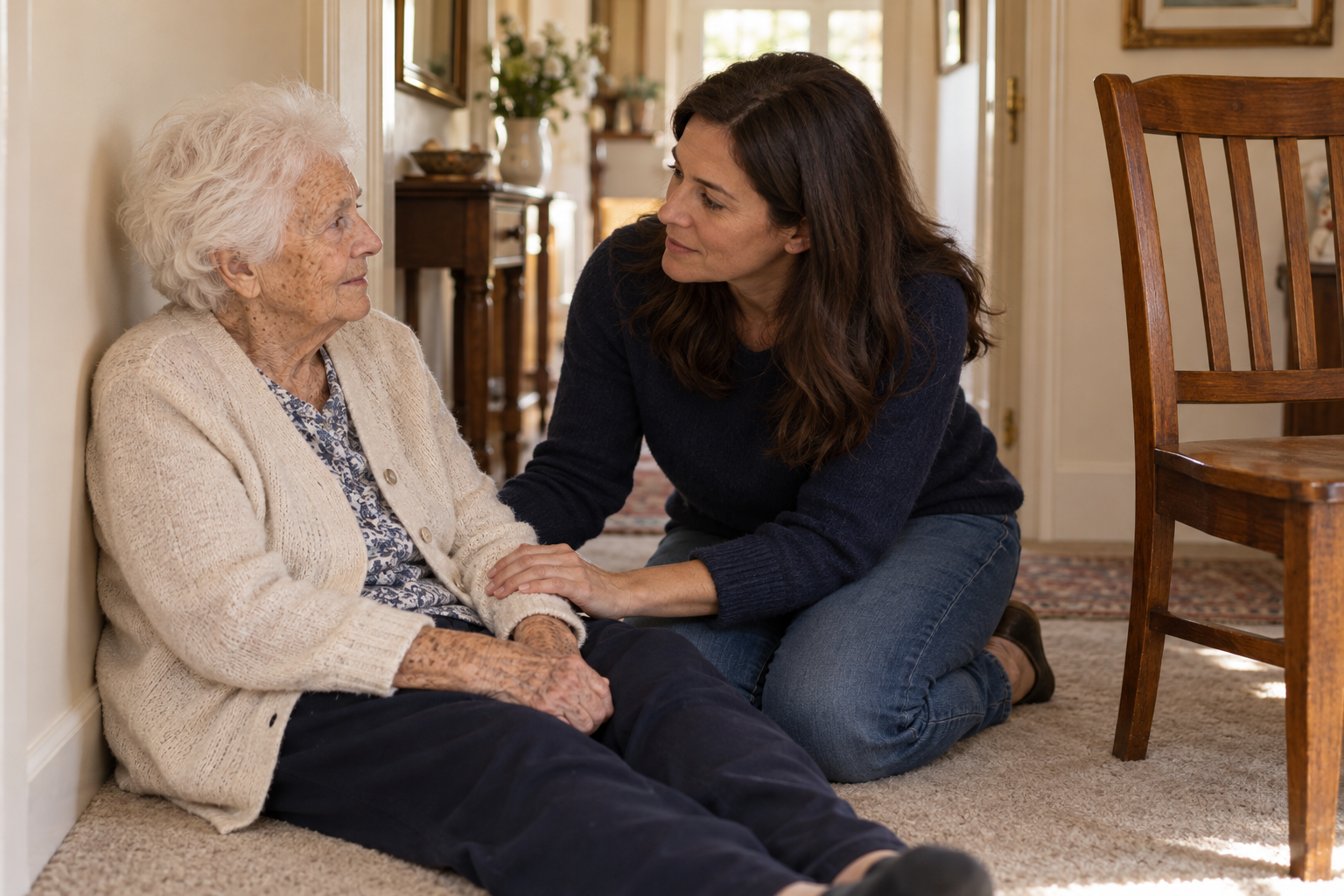
If you are reading this in a hallway with your phone in one hand, start here: do not lift them yet. The instinct to get someone off the floor immediately is strong and completely natural. It is also the thing most likely to turn a bad situation into a worse one. A fracture or a head injury can be made considerably more serious by being moved before anyone knows it is there. Take a breath. Here is the order to do this in. The first ten minutes Get down to their level and talk to them. Do not shout from the doorway. Kneel where they can see your face. Ask two questions before anything else. Where does it hurt? Did you hit your head? Ask the second one even if you are fairly sure they did not. People frequently do not remember, and a head injury is the thing you cannot afford to miss. Call 911 immediately if any of these apply That last one is not padding. If you are standing there weighing it up, the answer is to call. Nobody has ever regretted calling an ambulance for a parent who turned out to be fine. While you wait, keep them warm, keep them still, and stay with them. If they are not injured, help them up in stages Do not lift. You coach and steady, they do the moving. If you try to haul an adult off the floor you will hurt one or both of you. If pain appears at any point, or they cannot manage a step, stop. Make them comfortable where they are and call for help. If they cannot get up and are alone Time on the floor matters. Lying there for hours causes dehydration, pressure injuries, breathing problems and a drop in body temperature, and those complications can be more dangerous than the fall itself. This is the strongest argument there is for a medical alert device for anyone living alone who has fallen before. The next 48 hours Even if the fall seemed minor, watch for: Head injuries in older adults do not always announce themselves straight away. Bleeding can develop slowly over hours or even days, and the risk is considerably higher for anyone on blood thinners. Delayed symptoms are a reason to call a doctor, not a reason to wait and see. Tell the doctor, even if nothing is broken This is the step families skip most, usually because the fall turned out to be nothing and everybody wants to move on. Do not skip it. A fall is a symptom, not an accident. Very often something caused it, and that something is treatable. Common culprits include: Go to that appointment with them, and bring the full list of everything they take, including anything over the counter. Ask directly: what caused this, and what can we do about it? The part nobody warns you about Here is what happens next in a very large number of families, and almost nobody sees it coming. Your parent is fine. Nothing broke. Everyone is relieved. And then they stop doing things. They stop going down to the basement. Then they stop the morning walk, because the pavement is uneven. Then they stop going out in the evening. Each decision is sensible on its own and each one is made quietly, often without telling anybody. This is fear of falling, and it is one of the most consequential outcomes of a fall that caused no physical injury at all. The cruelty of it is that it creates exactly the outcome it is trying to avoid. Moving less means losing leg strength and balance. Losing strength and balance makes the next fall more likely, not less. Within a few months a person who was managing independently can be genuinely unsteady, and the first fall is the reason, even though it broke nothing. Watch for it. If your parent has quietly stopped doing something they used to do, that is worth a conversation and often worth a referral to physical therapy. Rebuilding confidence and strength is a real, treatable thing, and it works much better early. Why the next one matters more Falls are not rare. Over 14 million older adults in the United States, about one in four, report falling each year. And the trend is going the wrong way: the age adjusted fall death rate for older adults rose 21 percent between 2018 and 2024, from 64.7 to 78.4 deaths per 100,000. The practical point for your family is this. A first fall is the clearest warning you will get, and it is the moment when changes are easiest to make. Families who act after the first one usually keep their parent at home. Families who wait for the second one are frequently making decisions in a hospital corridor instead. What to change this week Walk the house at night. Not in daylight. Actually walk from the bed to the bathroom in the dark and see what they see. A lamp within reach of the bed and nightlights along the route fix a surprising proportion of falls. Deal with the floor. Loose rugs, especially at doorways and the bottom of stairs. Extension cords across walkways. Stacked papers. Furniture that has crept into the path. Put a real grab bar in the shower. A towel rail is not a grab bar. It will come out of the wall at the worst possible moment. Look at the shoes. Slippers with no back, smooth soles, and walking around in socks are all common causes. Watch how they get out of a chair. If standing takes two or three attempts, or they push off with both arms, that is lost leg strength and it is the most reliable warning sign of a future fall. Ask about physical therapy. Strength and balance work genuinely reduces fall risk, and most families never think to ask for it. Consider a medical alert device if they live alone, for the reasons
10 Signs Your Aging Parent Needs Help at Home: A Room-by-Room Guide
Most families do not arrive at the decision to bring in help because of one dramatic moment. There is rarely a single phone call that settles it. Instead there is a slow accumulation of small things you notice and then talk yourself out of. The fridge seemed emptier than usual. Mom repeated the same story twice in an hour. Dad took the stairs one at a time, holding the rail with both hands. Individually, each of those is easy to explain away. Together, they are a pattern, and patterns are what matter. This guide is built around something practical: what to actually look at the next time you are in your parent’s home. Not a vague list of concerns, but a walk through the rooms they use every day, and the specific things worth noticing in each one. First, the difference between aging and struggling Getting older changes people. Moving more slowly, needing an afternoon rest, occasionally forgetting a name or misplacing keys: these are ordinary parts of a long life, and treating every one of them as a crisis does your parent no favors. Independence matters enormously to the people who have it, and it should not be taken away over a lost set of keys. What separates normal aging from a genuine need for support is pattern and consequence. Forgetting where the reading glasses went is normal. Forgetting that the stove is on is not. Being slower on the stairs is normal. Being unable to get back up from a chair without a struggle is not. Skipping a shower on a lazy Sunday is normal. Avoiding showers for a week because getting in and out of the tub has become frightening is not. The question is not “has anything changed?” Something always has. The question is “has something changed in a way that affects safety, health, or quality of life?” With that in mind, here is what to look for. The kitchen The kitchen tells you more than almost any other room, because eating well requires planning, shopping, standing, lifting, and remembering. When any one of those becomes difficult, the kitchen shows it first. Open the refrigerator. Look for expired milk, spoiled produce, meals that were clearly bought but never cooked, or a fridge that is simply too empty. Also look for the opposite problem: five containers of the same item, which can signal forgotten shopping trips. Check the freezer and pantry. A shift from real meals to nothing but frozen dinners and crackers often means cooking has become too hard, not that tastes have changed. Look at the pots and the stovetop. Scorch marks, a burnt pan pushed to the back of a cupboard, or a stovetop that has stopped being wiped down can indicate forgotten burners. Notice small appliances. A kettle or coffee maker left switched on is worth paying attention to. The bathroom This is the room where most serious falls happen, and the room your parent is least likely to talk about honestly. Look at how they get in and out of the tub or shower. If there are no grab bars and they are gripping a towel rail or a soap dish for balance, that is a fall waiting to happen. Towel rails are not weight-bearing. Check for signs that bathing is being avoided. Dry towels, unused soap, or a shower that clearly has not been run recently, especially combined with changes in how your parent looks or smells, usually means the bathroom has become intimidating rather than that hygiene stopped mattering. Look at the medications. Not just whether they are there, but whether they are being taken. Pills still sitting in a Monday compartment on Thursday, several bottles of the same prescription, expired medications mixed in with current ones, or a system so complicated that even you cannot follow it: all of these are worth a conversation with their doctor. Notice odors. A persistent smell of urine is a difficult thing to bring up and an important thing to notice. It often points to incontinence that your parent is managing alone and is embarrassed about. The bedroom Look at the bedding. Sheets that have not been changed in a long time can mean laundry has become physically difficult, particularly if the washer is in a basement. Look at the path from the bed to the bathroom. This is the route your parent takes at two in the morning, half asleep. Is there a lamp within reach? A nightlight? Or a dark hallway with a rug in it? Check the closet and laundry. Clothes worn several days in a row, or clean and dirty laundry mixed together, suggests the daily routine has broken down somewhere. The living areas Look down. Loose rugs, extension cords crossing walkways, stacks of newspapers, and furniture that has been rearranged into a maze are the most common and most fixable fall risks in any home. Look at their chair. If your parent now spends nearly all day in one seat, notice how they get out of it. Rocking forward, pushing off with both arms, or needing two or three attempts is a meaningful sign of lost lower body strength, and it is one of the most reliable predictors of a future fall. Look at the general condition of the room. A noticeable decline in tidiness in someone who was always house-proud is not laziness. It usually means the physical work of keeping up has outpaced their ability, or that something is affecting their mood or motivation. The stairs and the entryway Watch them go up and down. One step at a time, resting halfway, both hands on the rail, or avoiding the upstairs entirely and sleeping on the couch instead. Check the front entrance. How do they manage the threshold, the porch step, the lighting after dark? This is also where you will notice whether the mail is being brought in daily or left to gather. The mail and the paperwork This pile is one of the
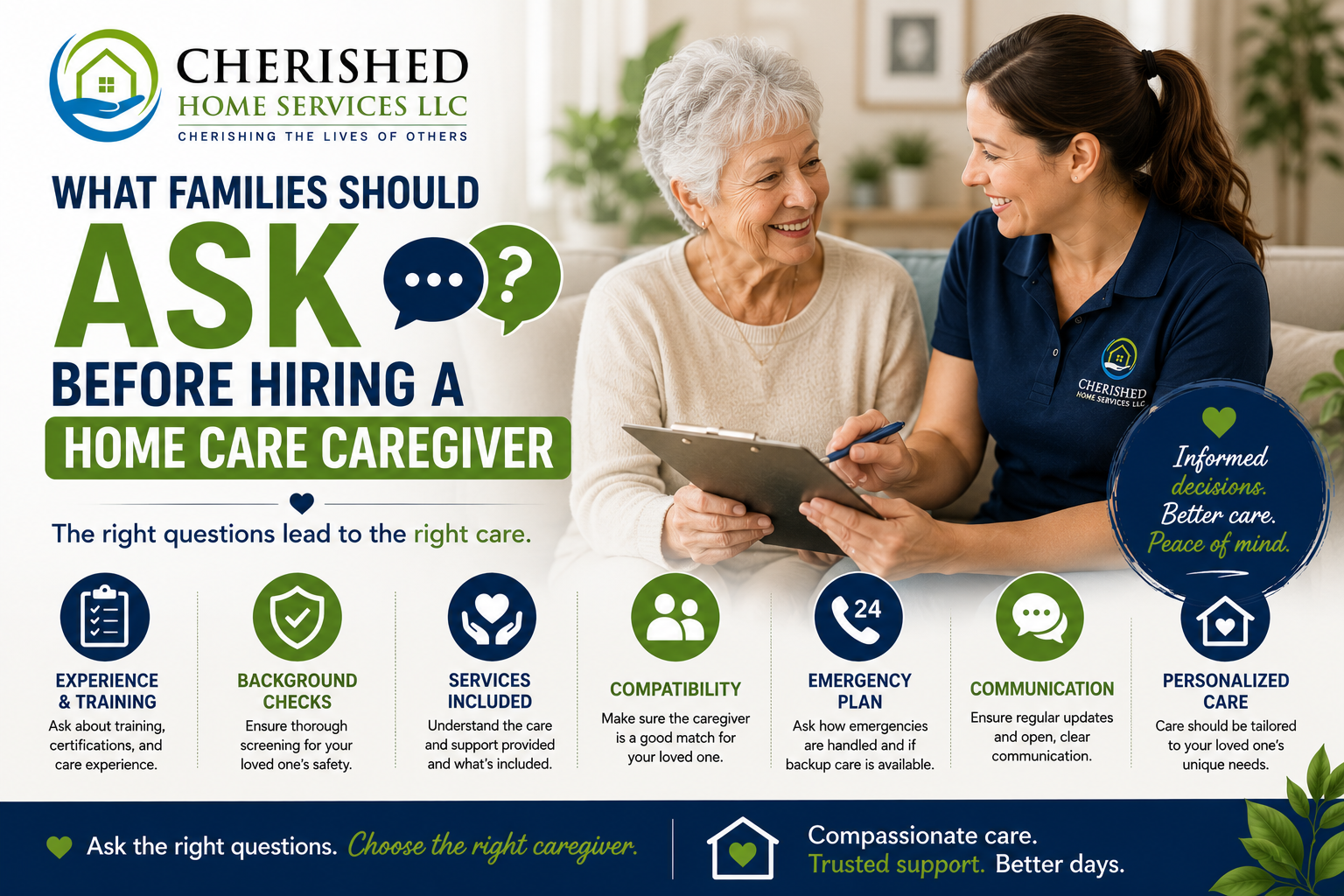
What Families Should Ask Before Hiring a Home Care Caregiver
Choosing a caregiver for a loved one is one of the most important decisions a family can make. Families are not simply hiring someone to help with daily tasks they are trusting someone to care for the safety, dignity, comfort, and emotional well-being of someone they deeply love. In 2026, more families are searching for trustworthy home care services that provide compassionate, reliable, and personalized support for seniors aging at home. Before making a decision, families should know the right questions to ask. Why Choosing the Right Caregiver Matters The right caregiver can improve a senior’s: The wrong fit, however, can create stress, communication problems, and concerns about care quality. That is why families should take time to evaluate caregivers carefully instead of rushing the process. 1. Is the Caregiver Properly Trained and Experienced? Families should ask about: Experienced caregivers are often better prepared to handle both daily routines and unexpected situations calmly and professionally. 2. Are Background Checks Conducted? Safety should always come first. A trusted home care provider should screen caregivers through: Families deserve peace of mind knowing their loved one is in safe hands. 3. What Services Are Included? Not all caregivers provide the same level of support. Families should clearly ask what services are available, such as: Understanding services early prevents confusion later. 4. How Does the Agency Match Caregivers with Seniors? Personality compatibility matters more than many people realize. A caregiver should match the senior’s: Strong caregiver-client relationships often improve emotional well-being and trust. 5. How Does the Agency Handle Emergencies? Families should ask: Reliable communication and emergency planning are extremely important in home care. 6. Will Families Receive Regular Updates? Clear communication helps families stay informed and confident. Ask whether caregivers or agencies provide: Transparency builds trust between families and care providers. 7. Is Care Personalized? Every senior has unique needs. Quality home care should adapt to: Personalized care often leads to better comfort and satisfaction. 8. Does the Senior Feel Comfortable with the Caregiver? One of the most important questions is also the simplest: Does your loved one feel comfortable? Families should observe: Trust and comfort are essential for successful long-term care. Warning Signs Families Should Never Ignore Be cautious if a provider: Professional care providers should always prioritize safety, honesty, and compassion. How Home Care Services Help Families Professional home care can reduce stress for families while helping seniors remain safe and independent at home. At Cherished Home Services LLC, compassionate caregivers provide personalized support designed around each family’s unique needs and routines. Services may include: Final Thoughts Hiring a caregiver is not just about qualifications it is about trust, compassion, communication, and finding someone who truly cares. Families who ask the right questions can make more confident decisions and ensure their loved ones receive the respectful, dependable care they deserve. Taking time to choose carefully today can create greater comfort, safety, and peace of mind for years to come.
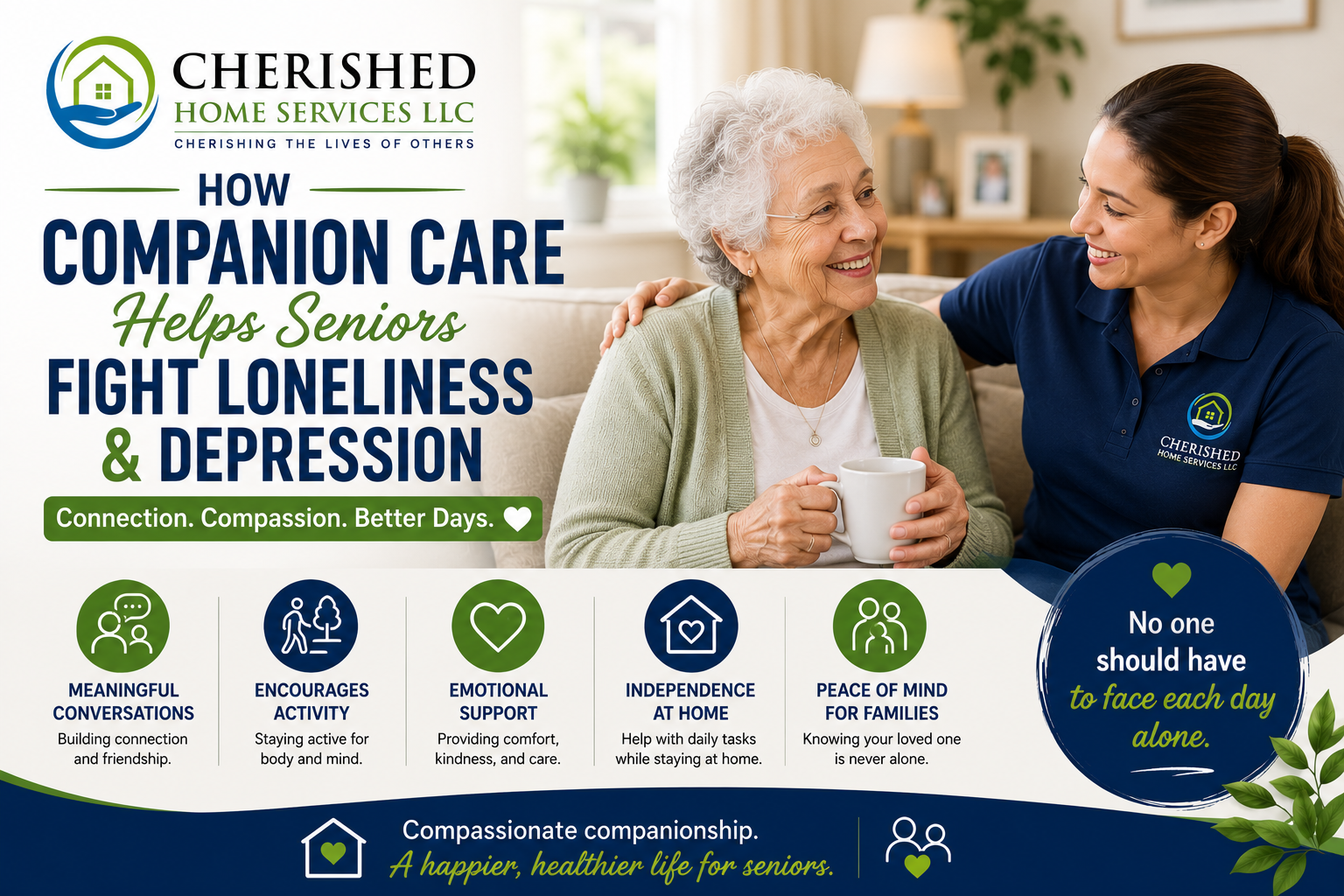
How Companion Care Helps Seniors Fight Loneliness and Depression
As seniors grow older, loneliness often becomes one of the most overlooked health concerns families face. While many people focus on physical care needs, emotional well-being is just as important. In 2026, more families are recognizing how isolation can affect a senior’s happiness, mental health, and overall quality of life. Companion care provides more than assistance — it provides connection, conversation, emotional support, and comfort. Why Loneliness Among Seniors Is Increasing Many older adults experience major life changes that can increase feelings of loneliness, including: Over time, isolation can affect both emotional and physical health. Many seniors spend long hours alone each day, which may lead to sadness, anxiety, or depression. The Emotional Impact of Senior Isolation Loneliness does not only affect emotions. Studies continue showing that social isolation may increase risks related to: Seniors who feel disconnected often lose motivation to stay active and engaged in daily life. What Is Companion Care? Companion care is a type of non-medical home care focused on emotional support, social interaction, and daily companionship for seniors living at home. Unlike clinical care, companion care centers around improving quality of life and reducing feelings of isolation. Companion caregivers may assist with: Sometimes, simply having someone present can make a major difference. Signs a Senior May Be Struggling with Loneliness Families should pay attention to emotional and behavioral changes such as: These signs are often mistaken as “normal aging,” but emotional isolation should never be ignored. How Companion Care Improves Mental Health 1. Provides Meaningful Social Interaction Regular conversation and companionship help seniors feel seen, valued, and emotionally connected. Even small daily interactions can improve mood significantly. 2. Encourages Physical Activity Companion caregivers often encourage seniors to: Staying engaged physically and mentally can improve overall well-being. 3. Creates Emotional Comfort Many seniors feel safer and calmer knowing someone is there to support them. Companionship can reduce fear, stress, and emotional isolation. 4. Supports Independence at Home Companion care allows seniors to remain in familiar surroundings while still receiving support and social connection. This balance often improves confidence and emotional stability. 5. Gives Families Peace of Mind Families cannot always be present every hour of the day due to work, parenting, or distance. Knowing a loved one has compassionate companionship provides reassurance and emotional relief for family members as well. Companion Care vs Personal Care Many families confuse companion care with personal care services. Companion Care Focuses On: Personal Care Includes: Some seniors benefit from both services together depending on their needs. Why Emotional Care Matters Just as Much as Physical Care A senior’s emotional health directly affects: Compassionate companionship can help seniors feel more connected, confident, and engaged in life again. How Home Care Services Can Help At Cherished Home Services LLC, compassionate caregivers provide companionship and emotional support that helps seniors remain comfortable, connected, and independent at home. Whether families need occasional visits or ongoing support, companion care can greatly improve a senior’s daily life and emotional well-being. Final Thoughts Loneliness among seniors is more common than many families realize, but it should never be considered a normal part of aging. Simple human connection can make an extraordinary difference. Companion care helps seniors feel supported, valued, and emotionally connected while allowing them to continue living safely and comfortably at home.
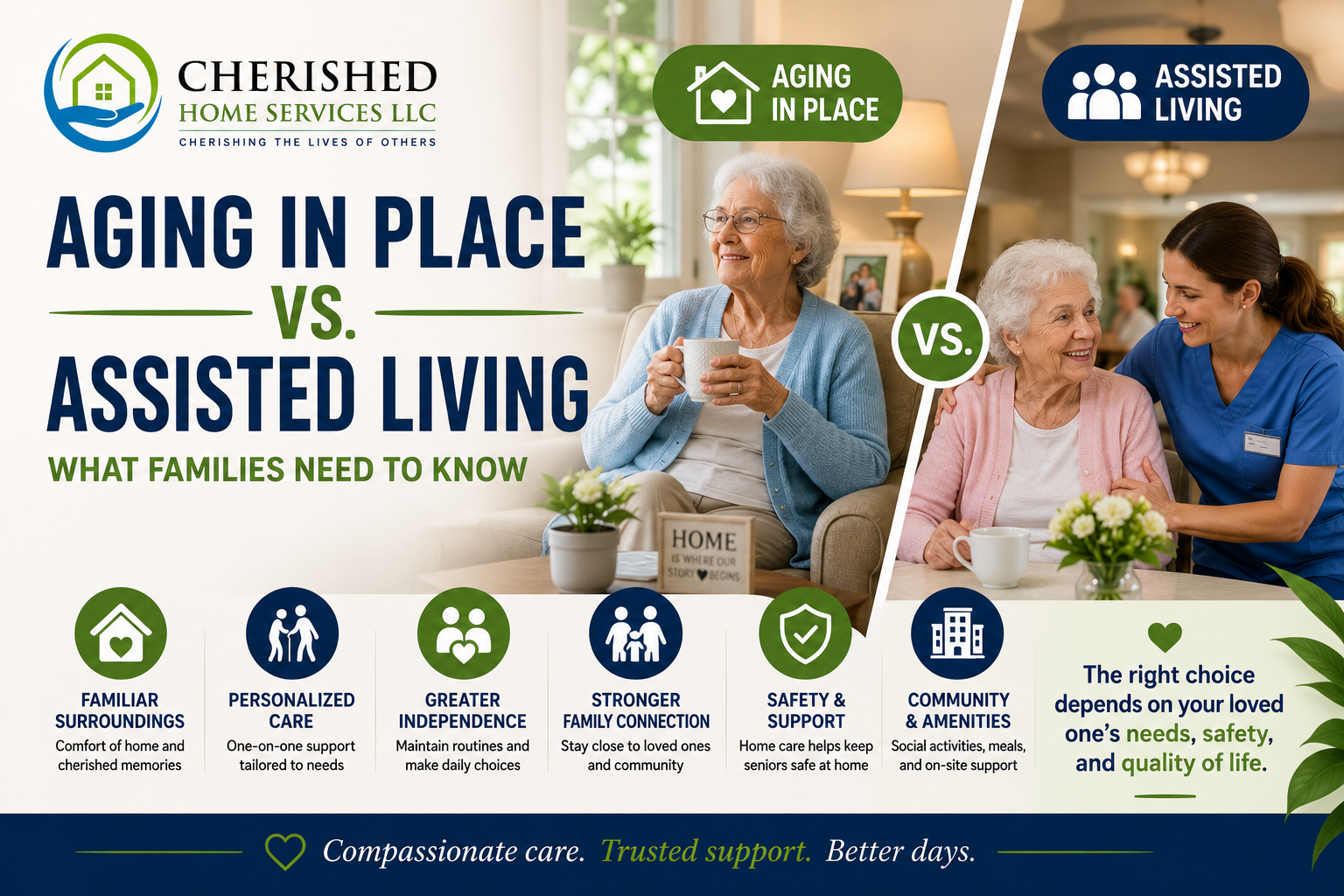
Aging in Place vs Assisted Living: What Families Need to Know
As parents and loved ones grow older, families often face one difficult question: Should we choose aging in place or move our loved one into assisted living? For many families, this decision comes with emotional stress, financial concerns, and fear of making the wrong choice. While every situation is different, understanding the benefits and challenges of both options can help families make a more confident and informed decision. In 2026, more seniors are choosing to age in place because they want to remain comfortable, independent, and connected to the place they call home. What Does Aging in Place Mean? Aging in place means a senior continues living in their own home safely and comfortably as they grow older instead of relocating to a nursing home or assisted living facility. This may include support from: The goal is to help seniors maintain independence while receiving the support they need. What Is Assisted Living? Assisted living facilities provide housing, meals, supervision, and daily assistance for seniors who need help with routine activities. These communities often include: While assisted living works well for some seniors, others struggle with the emotional adjustment of leaving their homes. Why Many Seniors Prefer Aging in Place For many older adults, home represents: Leaving home can feel overwhelming and emotionally difficult. Remaining at home often helps seniors feel more: This emotional stability can positively impact mental and physical health. Benefits of Aging in Place 1. Familiar Environment Seniors remain surrounded by their belongings, routines, and memories, which can reduce confusion and anxiety. This is especially important for seniors experiencing memory loss or dementia. 2. More Independence At home, seniors often maintain greater control over: Maintaining independence can improve emotional well-being. 3. Personalized One-on-One Care Unlike large facilities, home care offers more individualized attention tailored to a senior’s specific needs. Professional caregivers can assist with: 4. Stronger Family Connection Aging in place often allows families to remain more actively involved in their loved one’s daily life. Seniors may feel less isolated when surrounded by familiar family interactions. When Assisted Living May Be Necessary Although aging in place works well for many seniors, assisted living may become necessary in situations involving: Families should carefully evaluate safety, health needs, and long-term care requirements. Questions Families Should Ask Before Deciding Before making a decision, families should consider: Is the home safe? Can the home be modified to reduce risks? Does the senior want to remain at home? A senior’s emotional preference matters greatly. What level of support is needed? Some seniors only need part-time assistance, while others require daily care. Is family caregiver burnout becoming a concern? Professional support can help families avoid exhaustion and stress. What option provides the best quality of life? The goal should always be safety, dignity, comfort, and emotional well-being. How Home Care Supports Aging in Place Professional home care allows many seniors to remain safely at home longer while giving families peace of mind. At Cherished Home Services LLC, compassionate caregivers help seniors maintain independence through personalized in-home support designed around each family’s needs. Services may include: Final Thoughts There is no one-size-fits-all answer when choosing between aging in place and assisted living. However, many seniors thrive emotionally and physically when given the opportunity to remain safely in the comfort of their own homes. Families who understand all available options can make decisions with greater confidence, compassion, and peace of mind.
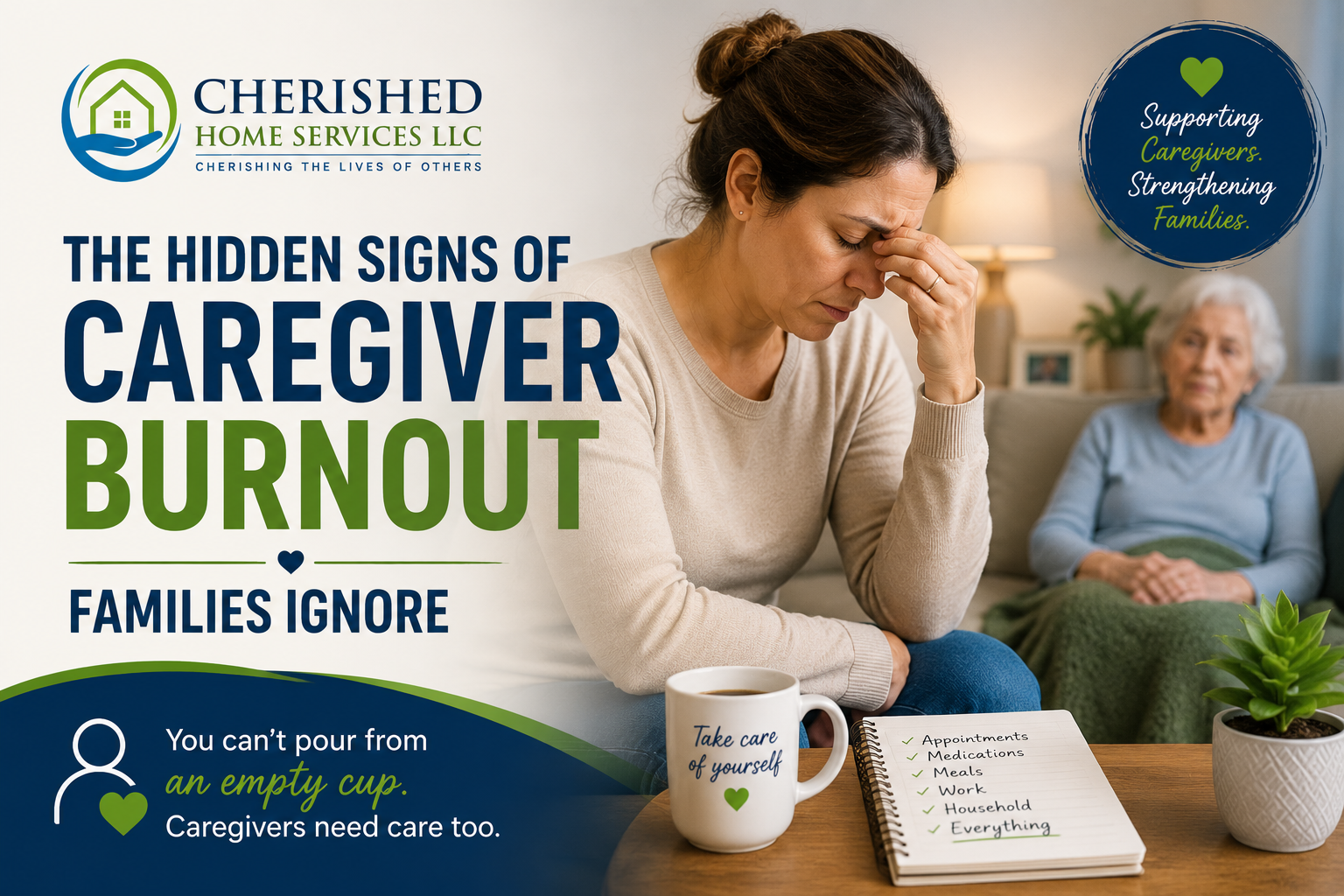
The Hidden Signs of Caregiver Burnout Families Ignore
Caring for an aging parent or loved one is an act of love, but many family caregivers quietly carry overwhelming emotional, mental, and physical stress every single day. At first, families often believe they can manage everything alone. Over time, exhaustion builds slowly and many people fail to recognize the warning signs until burnout begins affecting their health, relationships, and ability to provide care safely. Understanding caregiver burnout is essential for protecting both seniors and the people who care for them. What Is Caregiver Burnout? Caregiver burnout is a state of emotional, physical, and mental exhaustion caused by the ongoing stress of caring for another person. Family caregivers often juggle: Without proper support, the constant demands can become overwhelming. Why Caregiver Burnout Is Becoming More Common In 2026, more families are choosing aging in place and home care services instead of nursing homes or assisted living facilities. While this allows seniors to remain comfortable at home, it also means many family members become unpaid caregivers often without training, rest, or emotional support. The result is rising stress and burnout among caregivers nationwide. Hidden Signs of Caregiver Burnout Burnout does not always appear suddenly. Many signs develop slowly and are often ignored. 1. Constant Exhaustion Feeling tired occasionally is normal. But persistent exhaustion, even after resting, may be a serious warning sign. Caregivers often experience: Over time, chronic exhaustion affects both mental and physical health. 2. Increased Irritability or Frustration Burnout can make even small situations feel overwhelming. Caregivers may notice: This emotional strain is more common than many families realize. 3. Withdrawing from Friends and Social Activities Many caregivers slowly stop prioritizing themselves. They may avoid: Isolation can increase anxiety, stress, and depression. 4. Feeling Guilty All the Time Many caregivers feel guilty no matter what they do. They may believe: This mindset creates emotional exhaustion and unhealthy pressure. 5. Neglecting Personal Health Burned-out caregivers often ignore their own health needs. Common signs include: A caregiver cannot effectively support someone else while neglecting themselves. 6. Feeling Emotionally Numb Some caregivers begin feeling disconnected emotionally. They may lose: This emotional fatigue can seriously impact quality of care and personal well-being. How Burnout Affects Seniors Caregiver burnout does not only affect the caregiver. It can also impact seniors through: Supporting caregivers ultimately protects seniors as well. How Families Can Prevent Caregiver Burnout Ask for Help Early Many families wait too long before seeking support. Even a few hours of assistance each week can make a major difference. Share Responsibilities Caregiving should not fall entirely on one person whenever possible. Family members can help with: Prioritize Rest and Self-Care Caregivers need: Self-care is not selfish it is necessary. Consider Professional Home Care Support Professional caregivers can help reduce daily pressure while providing compassionate assistance for seniors at home. Services may include: At Cherished Home Services LLC, compassionate caregivers help families feel supported while ensuring seniors receive quality care in the comfort of home. Final Thoughts Caregiver burnout is real, common, and often ignored until families reach a breaking point. Recognizing the signs early can help caregivers protect their own well-being while continuing to provide safe, compassionate support for their loved ones. No family should feel like they must carry the entire burden alone.

How to Prevent Senior Falls at Home
Falls are one of the leading causes of injury among older adults. For many families, one unexpected fall can completely change a senior’s independence, confidence, and quality of life. The good news is that many falls can be prevented with the right support, safety adjustments, and daily care routines. As more families choose aging in place over nursing facilities, creating a safe home environment has become more important than ever. Why Senior Falls Are So Dangerous A simple fall can lead to serious injuries such as: After a fall, many seniors begin limiting their movement, which can lead to muscle weakness, isolation, and declining health. That is why prevention matters before an accident happens. Common Causes of Falls at Home Many homes contain hidden risks that families often overlook. Some of the most common causes include: Even small obstacles can become dangerous for older adults. 7 Ways to Prevent Senior Falls at Home 1. Improve Lighting Throughout the Home Dim lighting makes it harder for seniors to see obstacles clearly, especially during nighttime. Install: Good visibility greatly reduces fall risks. 2. Remove Tripping Hazards Walk through the home carefully and remove anything that may cause trips or slips. This includes: A cleaner walking path creates a safer environment immediately. 3. Install Bathroom Safety Features Bathrooms are one of the highest-risk areas for falls. Helpful additions include: These simple adjustments can significantly improve safety and confidence. 4. Encourage Regular Movement and Exercise Weak muscles and poor balance increase fall risks. Gentle activities such as: can help seniors maintain strength and coordination. Always consult a healthcare professional before starting a new exercise plan. 5. Review Medications Regularly Some medications may cause: Families should regularly review medications with a doctor or pharmacist to identify possible side effects. 6. Make Sure Seniors Wear Proper Footwear Loose slippers or socks without grip can increase slipping risks. Safer options include: Proper footwear plays a bigger role than many families realize. 7. Consider Professional Home Care Support Professional caregivers can help seniors move safely throughout the day while assisting with: Having compassionate assistance at home can provide peace of mind for both seniors and their families. Warning Signs a Senior May Be at Higher Risk of Falling Families should pay attention to signs such as: Early action can help prevent serious injuries later. How Home Care Can Help Prevent Falls In-home caregivers do more than provide companionship. They also help seniors maintain safer daily routines and monitor changes in mobility or behavior. At Cherished Home Services LLC, caregivers provide compassionate support that helps seniors remain safe, comfortable, and independent in their own homes. Final Thoughts Preventing falls is not just about safety it is about protecting a senior’s independence, confidence, and quality of life. Small changes inside the home, combined with proper care and support, can make a major difference. Families who take proactive steps today can help their loved ones stay healthier and safer for years to come.

Why More Families Choose Home Care services at the Start of a New Year
Learn why families increasingly choose home care services to support seniors with safety, independence, and emotional well-being. Discover how Cherished Home Services LLC helps families start the year with peace of mind.

Why Home Care Is a Lifeline During the Holiday Season
The holiday season is meant to be a time of joy, warmth, and togetherness. Families gather, old traditions come alive, and homes feel just a little cozier. But for many seniors especially those living alone or managing health challenges the holidays can bring a very different experience. Shorter days, colder weather, and busy family schedules can make this time of year overwhelming. That’s where home care becomes a true lifeline. It’s not just about assistance with daily tasks it’s about emotional connection, safety, and helping seniors feel included during one of the most meaningful seasons of the year. At Cherished Home Services LLC, we’ve seen firsthand how life-changing this support can be. Every holiday season, our caregivers help seniors remain safe, comfortable, and loved right in the place they feel most at home. 1. The Holidays Can Be Emotionally Hard for Seniors Home Care Helps Ease Loneliness While the holidays are full of celebrations, they can also be a painful reminder of loss or distance for many older adults. Seniors may experience: Home care brings back connection. A caregiver can spend time chatting, sharing stories, preparing festive food, or simply offering companionship during the moments that matter. Even small interactions a warm conversation, a walk outside, decorating together can greatly improve emotional well-being. With home care, seniors don’t go through the holiday season alone. 2. Home Care Reduces Holiday Stress for Families The holiday season is one of the busiest times of the year. Families often juggle: Adding a loved one’s care on top of everything can feel overwhelming — and it’s normal to feel guilty for not being able to do it all. Home care gives families the support they need. Cherished Home Services LLC helps by: This allows families to enjoy the holidays with their loved ones, not exhausted from caregiving responsibilities. 3. The Holiday Season Brings Increased Safety Risks for Seniors Winter months can be challenging especially in states like Virginia where cold snaps, icy conditions, and early sunsets affect mobility and safety. Home care reduces the risks seniors commonly face, including: ✔ Fall hazards from slippery walkways or clutter Caregivers help maintain a safe, clear home environment. ✔ Medication mismanagement during busy days Reminders help seniors stay consistent and safe. ✔ Winter dehydration Older adults often forget to drink fluids in cold weather. ✔ Poor nutrition or skipped meals Caregivers prepare simple, nutritious meals — including holiday favorites. ✔ Seasonal depression (SAD) Daily interaction prevents isolation and emotional slump. ✔ Difficulty getting to medical appointments Non-medical caregivers provide transportation support. Home care acts as a protective layer, ensuring your loved one stays safe, healthy, and cared for all season long. 4. Home Care Helps Seniors Stay Involved in Holiday Traditions One of the most beautiful things about home care is how it helps seniors stay connected to the traditions that matter most. Cherished Home Services caregivers can: Even if mobility or health has changed, seniors can still enjoy the magic of the holidays just with a little extra support. The goal is to help seniors feel included, not left behind. 5. Personalized Support Makes the Holiday Season More Peaceful Every senior has unique needs. That’s why personalized care plans matter especially during the holiday season when routines change. Cherished Home Services LLC offers care plans that include: Our caregivers work closely with families to ensure continuity, comfort, and peace of mind. 6. Cherished Home Services LLC Serving Virginia Families with Heart For more than 20 years, Cherished Home Services LLC has been a trusted home care provider across: Families choose CHS because: ✔ Caregivers treat every client like family Compassion, patience, and kindness are at the heart of what we do. ✔ We focus on emotional care, not just physical tasks Seniors need connection, companionship, and dignity. ✔ We support veterans and connect families to trusted resources Even when needs extend beyond non-medical care. ✔ We personalize every care plan No two families are the same and we honor that. ✔ We show up with heart, especially during the holidays Many caregivers go above and beyond to help seniors feel loved and included. 7. The Holidays Are Better with Home Care Here’s Why Home care means your loved one can: ✔ Stay in the comfort of their own home✔ Enjoy familiar traditions✔ Maintain their independence✔ Stay safe during winter months✔ Have companionship during emotional moments✔ Receive help with daily tasks✔ Feel valued and supported Home care is not just a serviceIt’s a lifeline of connection, safety, and love during one of the most meaningful seasons of the year. Conclusion: Give Your Loved One the Gift of Comfort This Holiday Season If you’ve been wondering whether home care is right for your family, the holiday season is one of the best times to begin. It provides support, peace of mind, and a sense of togetherness for seniors who need extra care. At Cherished Home Services LLC, we’re here to make the holidays warmer, safer, and more joyful for your loved ones.

October Is Cancer Awareness Month: Standing Strong Against Breast Cancer
Every October, the world comes together to honor the fighters, the survivors, and the memories of loved ones who have battled cancer.At Cherished Home Services, we join this mission not just with words, but through care that brings comfort, dignity, and strength to those who need it most. Why Cancer Awareness Matters Cancer doesn’t just affect the body it affects families, routines, and the emotional well-being of everyone involved. Awareness means early detection, timely treatment, and the reminder that no one fights alone. As we wear pink this month, we also remember that behind every diagnosis is a story of courage and a need for support at home. How Cherished Home Services Supports Cancer Patients For many individuals in Virginia Beach and surrounding areas, staying at home while receiving treatment is not only more comfortable but also promotes emotional healing.Our compassionate caregivers provide personalized home care services that include: For clients who require medical attention, Cherished Home Services works closely with families to refer trusted local medical professionals and hospice providers, ensuring continuity of care and peace of mind. A Holistic Approach to Healing We believe healing is more than treatment it’s about hope, comfort, and care.Our team takes pride in providing services that meet not just physical needs, but emotional ones too.Because sometimes, the best medicine is knowing you’re not alone. Serving with Heart Based in Virginia Beach, we’re proud to serve our local community with compassion, integrity, and professionalism.We’ve helped countless families find balance during the most challenging times and we continue to stand beside every client, one home at a time. 💬 Ready to Learn More? If your loved one is facing cancer or in recovery, let us help bring care and comfort home.📞 Call us today: (757) 220-2396🌐 Visit: www.chsllccares.com