Choosing a caregiver for a loved one is one of the most important decisions a family can make. Families are not simply hiring someone to help with daily tasks they are trusting someone to care for the safety, dignity, comfort, and emotional well-being of someone they deeply love.
In 2026, more families are searching for trustworthy home care services that provide compassionate, reliable, and personalized support for seniors aging at home.
Before making a decision, families should know the right questions to ask.
Why Choosing the Right Caregiver Matters
The right caregiver can improve a senior’s:
- Safety
- Comfort
- Independence
- Emotional health
- Quality of life
The wrong fit, however, can create stress, communication problems, and concerns about care quality.
That is why families should take time to evaluate caregivers carefully instead of rushing the process.
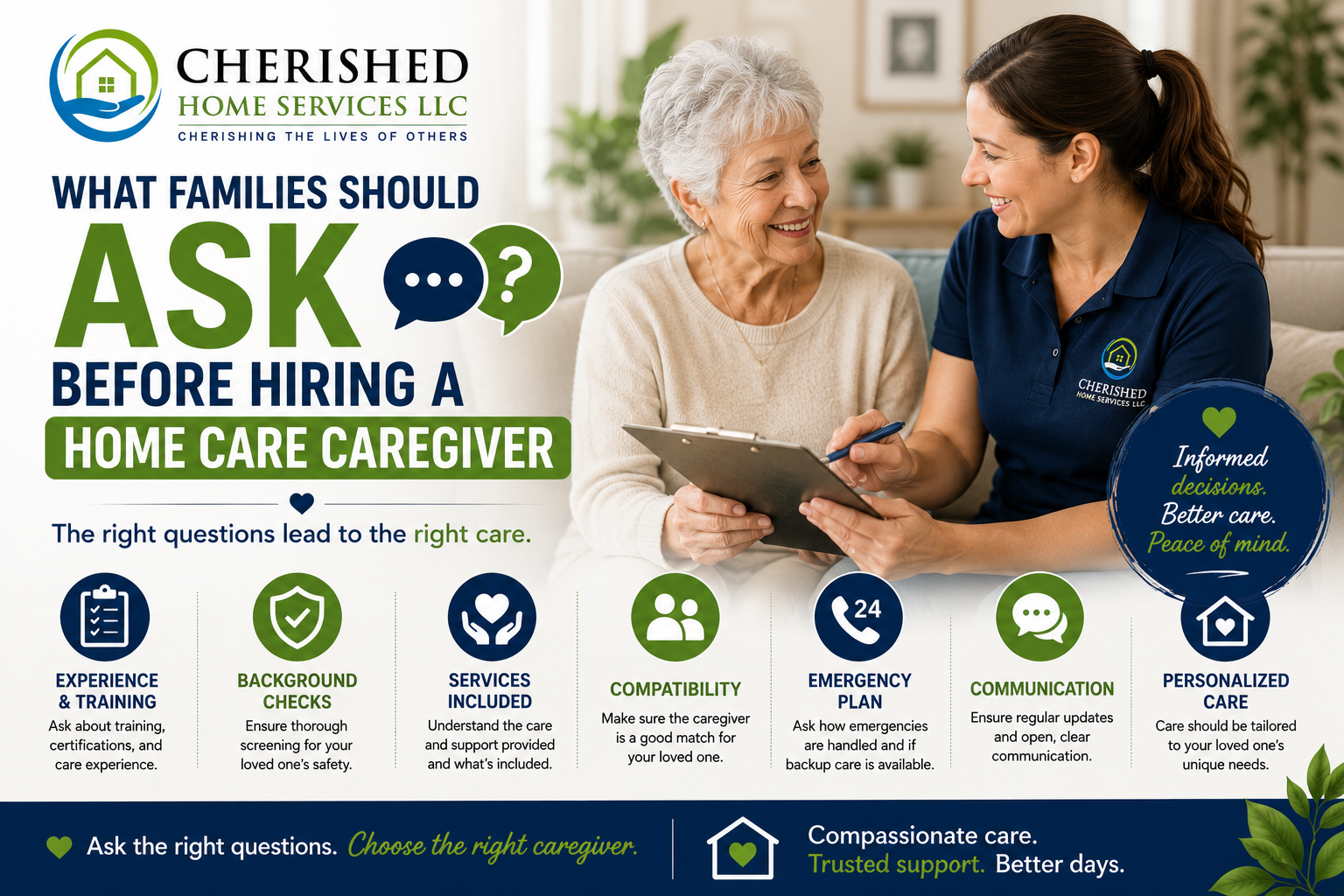
1. Is the Caregiver Properly Trained and Experienced?
Families should ask about:
- Caregiver training
- Certifications
- Previous experience
- Specialized care experience
- Dementia or mobility support knowledge
Experienced caregivers are often better prepared to handle both daily routines and unexpected situations calmly and professionally.
2. Are Background Checks Conducted?
Safety should always come first.
A trusted home care provider should screen caregivers through:
- Background checks
- Identity verification
- Reference checks
- Employment history reviews
Families deserve peace of mind knowing their loved one is in safe hands.
3. What Services Are Included?
Not all caregivers provide the same level of support.
Families should clearly ask what services are available, such as:
- Companion care
- Personal care assistance
- Meal preparation
- Medication reminders
- Transportation
- Light housekeeping
- Mobility support
Understanding services early prevents confusion later.
4. How Does the Agency Match Caregivers with Seniors?
Personality compatibility matters more than many people realize.
A caregiver should match the senior’s:
- Communication style
- Personality
- Preferences
- Routine
- Emotional needs
Strong caregiver-client relationships often improve emotional well-being and trust.
5. How Does the Agency Handle Emergencies?
Families should ask:
- What happens if a caregiver cannot arrive?
- Is backup care available?
- How are emergencies handled?
- Who can families contact after hours?
Reliable communication and emergency planning are extremely important in home care.
6. Will Families Receive Regular Updates?
Clear communication helps families stay informed and confident.
Ask whether caregivers or agencies provide:
- Care updates
- Visit summaries
- Health observations
- Schedule communication
Transparency builds trust between families and care providers.
7. Is Care Personalized?
Every senior has unique needs.
Quality home care should adapt to:
- Medical conditions
- Daily routines
- Cultural preferences
- Dietary needs
- Emotional support requirements
Personalized care often leads to better comfort and satisfaction.
8. Does the Senior Feel Comfortable with the Caregiver?
One of the most important questions is also the simplest:
Does your loved one feel comfortable?
Families should observe:
- Communication
- Patience
- Respect
- Compassion
- Emotional connection
Trust and comfort are essential for successful long-term care.
Warning Signs Families Should Never Ignore
Be cautious if a provider:
- Avoids answering questions
- Has unclear pricing
- Lacks proper screening processes
- Shows poor communication
- Rushes the consultation process
Professional care providers should always prioritize safety, honesty, and compassion.
How Home Care Services Help Families
Professional home care can reduce stress for families while helping seniors remain safe and independent at home.
At Cherished Home Services LLC, compassionate caregivers provide personalized support designed around each family’s unique needs and routines.
Services may include:
- Companion care
- Personal care
- Respite care
- Medication reminders
- Mobility assistance
- Daily living support
Final Thoughts
Hiring a caregiver is not just about qualifications it is about trust, compassion, communication, and finding someone who truly cares.
Families who ask the right questions can make more confident decisions and ensure their loved ones receive the respectful, dependable care they deserve.
Taking time to choose carefully today can create greater comfort, safety, and peace of mind for years to come.