Most families do not arrive at the decision to bring in help because of one dramatic moment. There is rarely a single phone call that settles it. Instead there is a slow accumulation of small things you notice and then talk yourself out of. The fridge seemed emptier than usual. Mom repeated the same story twice in an hour. Dad took the stairs one at a time, holding the rail with both hands.
Individually, each of those is easy to explain away. Together, they are a pattern, and patterns are what matter.
This guide is built around something practical: what to actually look at the next time you are in your parent’s home. Not a vague list of concerns, but a walk through the rooms they use every day, and the specific things worth noticing in each one.
First, the difference between aging and struggling
Getting older changes people. Moving more slowly, needing an afternoon rest, occasionally forgetting a name or misplacing keys: these are ordinary parts of a long life, and treating every one of them as a crisis does your parent no favors. Independence matters enormously to the people who have it, and it should not be taken away over a lost set of keys.
What separates normal aging from a genuine need for support is pattern and consequence.
Forgetting where the reading glasses went is normal. Forgetting that the stove is on is not. Being slower on the stairs is normal. Being unable to get back up from a chair without a struggle is not. Skipping a shower on a lazy Sunday is normal. Avoiding showers for a week because getting in and out of the tub has become frightening is not.
The question is not “has anything changed?” Something always has. The question is “has something changed in a way that affects safety, health, or quality of life?”
With that in mind, here is what to look for.
The kitchen
The kitchen tells you more than almost any other room, because eating well requires planning, shopping, standing, lifting, and remembering. When any one of those becomes difficult, the kitchen shows it first.
Open the refrigerator. Look for expired milk, spoiled produce, meals that were clearly bought but never cooked, or a fridge that is simply too empty. Also look for the opposite problem: five containers of the same item, which can signal forgotten shopping trips.
Check the freezer and pantry. A shift from real meals to nothing but frozen dinners and crackers often means cooking has become too hard, not that tastes have changed.
Look at the pots and the stovetop. Scorch marks, a burnt pan pushed to the back of a cupboard, or a stovetop that has stopped being wiped down can indicate forgotten burners.
Notice small appliances. A kettle or coffee maker left switched on is worth paying attention to.
The bathroom
This is the room where most serious falls happen, and the room your parent is least likely to talk about honestly.
Look at how they get in and out of the tub or shower. If there are no grab bars and they are gripping a towel rail or a soap dish for balance, that is a fall waiting to happen. Towel rails are not weight-bearing.
Check for signs that bathing is being avoided. Dry towels, unused soap, or a shower that clearly has not been run recently, especially combined with changes in how your parent looks or smells, usually means the bathroom has become intimidating rather than that hygiene stopped mattering.
Look at the medications. Not just whether they are there, but whether they are being taken. Pills still sitting in a Monday compartment on Thursday, several bottles of the same prescription, expired medications mixed in with current ones, or a system so complicated that even you cannot follow it: all of these are worth a conversation with their doctor.
Notice odors. A persistent smell of urine is a difficult thing to bring up and an important thing to notice. It often points to incontinence that your parent is managing alone and is embarrassed about.
The bedroom
Look at the bedding. Sheets that have not been changed in a long time can mean laundry has become physically difficult, particularly if the washer is in a basement.
Look at the path from the bed to the bathroom. This is the route your parent takes at two in the morning, half asleep. Is there a lamp within reach? A nightlight? Or a dark hallway with a rug in it?
Check the closet and laundry. Clothes worn several days in a row, or clean and dirty laundry mixed together, suggests the daily routine has broken down somewhere.
The living areas
Look down. Loose rugs, extension cords crossing walkways, stacks of newspapers, and furniture that has been rearranged into a maze are the most common and most fixable fall risks in any home.
Look at their chair. If your parent now spends nearly all day in one seat, notice how they get out of it. Rocking forward, pushing off with both arms, or needing two or three attempts is a meaningful sign of lost lower body strength, and it is one of the most reliable predictors of a future fall.
Look at the general condition of the room. A noticeable decline in tidiness in someone who was always house-proud is not laziness. It usually means the physical work of keeping up has outpaced their ability, or that something is affecting their mood or motivation.
The stairs and the entryway
Watch them go up and down. One step at a time, resting halfway, both hands on the rail, or avoiding the upstairs entirely and sleeping on the couch instead.
Check the front entrance. How do they manage the threshold, the porch step, the lighting after dark? This is also where you will notice whether the mail is being brought in daily or left to gather.
The mail and the paperwork
This pile is one of the most revealing things in the house, and it is often in plain sight.
Look for unopened mail. Especially bills. Unpaid bills and late notices in someone who has always been financially careful can mean forgetfulness, or it can mean they are struggling and too proud to say so.
Look for warning signs of financial exploitation. Sweepstakes letters, unfamiliar charities, requests for gift cards, or checks written to names nobody recognizes. Older adults living alone are heavily targeted, and confusion makes it harder to spot a scam.
Notice unopened medical mail. Unread insurance letters and missed appointment notices often mean healthcare is quietly going unmanaged.
The car
If your parent still drives, walk around the vehicle.
Look for new dents and scrapes, particularly on corners, bumpers, and mirrors. Also look at the garage doorframe and any nearby posts.
Ask where they have driven recently. A parent who has quietly stopped driving at night, on the highway, or beyond a few familiar blocks has usually made that decision because something happened. That shrinking radius also tends to mean groceries, appointments, church, and friends are becoming harder to reach.
Your parent themselves
Everything above is about the house. This is about the person.
Weight. Clothes or rings that have become loose, or a face that looks thinner than last time, matter more than the number on any scale.
Grooming. Unwashed hair, uncut nails, an unshaven face on someone who always shaved, or the same outfit across multiple visits.
Bruising. Unexplained bruises, especially on arms, hips, and shins, frequently mean falls that were never mentioned. Ask directly and gently, because falls are commonly hidden out of fear of losing independence.
Movement. Reaching for walls and furniture, a wider stance, shuffling, hesitating before standing.
The conversation itself
Some of the clearest signs are not in the house at all. They are in how your parent talks with you.
Repetition. Not forgetting a word, but telling you the same story or asking the same question within the same conversation.
Missed appointments and events. Doctors, dentists, birthdays, standing plans with friends.
Confusion about the familiar. Difficulty with tasks that were routine for decades, such as operating a well-known appliance or following a favorite recipe.
Withdrawal. Having stopped going to church, the club, the standing coffee, or the phone calls. Sometimes this is mobility. Sometimes it is hearing loss. Sometimes it is depression, which is widely underdiagnosed in older adults and is very often mistaken for “just getting older.”
Mood and personality changes. New irritability, anxiety, apathy, or suspicion can reflect cognitive change, depression, medication interactions, or an untreated medical problem. All of those are worth a doctor’s attention.
If isolation is what stands out most to you, we wrote about it here: How Companion Care Helps Seniors Fight Loneliness and Depression.
What needs attention immediately
Most of what you notice can be handled thoughtfully, over time. A few things should not wait:
- A fall that caused injury, or repeated falls
- Leaving the stove, oven, or space heater on
- Wandering, or getting lost somewhere familiar
- A serious driving incident
- Not taking essential medication, or taking it incorrectly
- Signs of significant weight loss or dehydration
- Any situation where your parent could be harmed before your next visit
How to bring it up without a fight
This is the part families dread, usually more than the observing.
Lead with a specific observation, not a verdict. “I think you need help” invites a defense. “Mom, I noticed there wasn’t much in the fridge. Is getting to the store harder than it used to be?” invites an answer. Specific and curious beats general and worried every time.
Ask about the task, not the person. Nobody wants to be told they are declining. Most people will happily admit that carrying laundry up from the basement has become a nuisance.
Offer help as something that protects independence, not something that ends it. This is not spin. A caregiver who handles the shower, the meals, and the driving is very often the reason someone gets to stay in their own home instead of moving. Framing it that way is both more accurate and easier to hear.
Start small. A few hours a week for the hardest parts of the day is far easier to accept than a full schedule, and it gives everyone a chance to see how it goes.
Let the doctor carry some of it. Many parents will accept from a physician what they will not accept from a child. A visit also rules out treatable causes such as thyroid problems, infections, vitamin deficiencies, hearing loss, or medication side effects, any of which can look like decline.
Expect to have the conversation more than once. First refusals are normal. Keep the door open rather than forcing it.
If you live far away
Plenty of adult children in this position are not local, which is especially common in the Hampton Roads area, where military careers and job moves regularly put families in different states from their parents.
A few things help:
- Plan your visit to include an ordinary weekday, not just a holiday when the house has been tidied and everyone is on best behavior.
- Arrive at different times of day. Late afternoon and evening reveal things that a midday visit will not.
- Talk to the people who see your parent regularly: neighbors, church friends, the pharmacist, the primary care office.
- Ask to be added as an authorized contact with their doctor and pharmacy while your parent is able to grant it.
- Have a professional in-home assessment done. An experienced set of eyes will identify in one visit what would take you months of weekend trips to piece together.
Frequently asked questions
What are the first signs an aging parent needs help at home? The earliest signs usually involve daily maintenance rather than health emergencies. Declining personal grooming, an empty or spoiled refrigerator, unopened mail and unpaid bills, and difficulty rising from a chair tend to appear before anything more dramatic. What matters is whether these form a consistent pattern rather than a one-time lapse.
Is forgetfulness a normal part of aging? Occasional forgetfulness is normal. Misplacing items, needing a moment to recall a name, or losing a train of thought happens at every age. Repeating the same question within one conversation, confusion about familiar tasks, getting lost in a known place, or forgetting whether medication was taken are different, and they are worth discussing with a physician.
My parent refuses help. What do I do? First refusals are common and rarely final. Lead with specific observations rather than conclusions, frame help as a way to stay at home rather than a step toward leaving it, and start with a small number of hours focused on the hardest task. Involving their doctor often helps, because many parents will accept a physician’s recommendation more readily than a child’s.
Does needing help at home mean it is time for assisted living? Not usually. Many older adults who need daily assistance remain safely at home for years with in-home support. The decision generally depends on how much help is needed, whether it is required around the clock, and how safe the home environment can be made.
Do we need a doctor’s order for non-medical home care? No. Non-medical home care, which covers personal care, meal preparation, medication reminders, light housekeeping, transportation, and companionship, does not require a physician’s order or referral. A family can arrange it directly.
How do I check on a parent who lives far away? Visit on an ordinary weekday rather than only during holidays, vary the time of day, stay in contact with neighbors and their healthcare providers, and consider a professional in-home assessment, which can surface concerns quickly that are difficult to spot from a distance.
If something feels off, it is worth a conversation
Families almost never regret looking into this early. What they regret is waiting for the fall, the hospital stay, or the phone call that forces a rushed decision under pressure.
Cherished Home Services LLC serves families throughout Virginia Beach and the greater Hampton Roads community with compassionate, person-centered care at home. Our caregivers are insured, bonded, and cleared through comprehensive State and Federal background checks. We will sit down with your family, look honestly at what is going on, and help you build a plan that fits, whether that means a few hours a week or something more.
Request a free consultation or call (757) 220-2396 to speak with our care team.
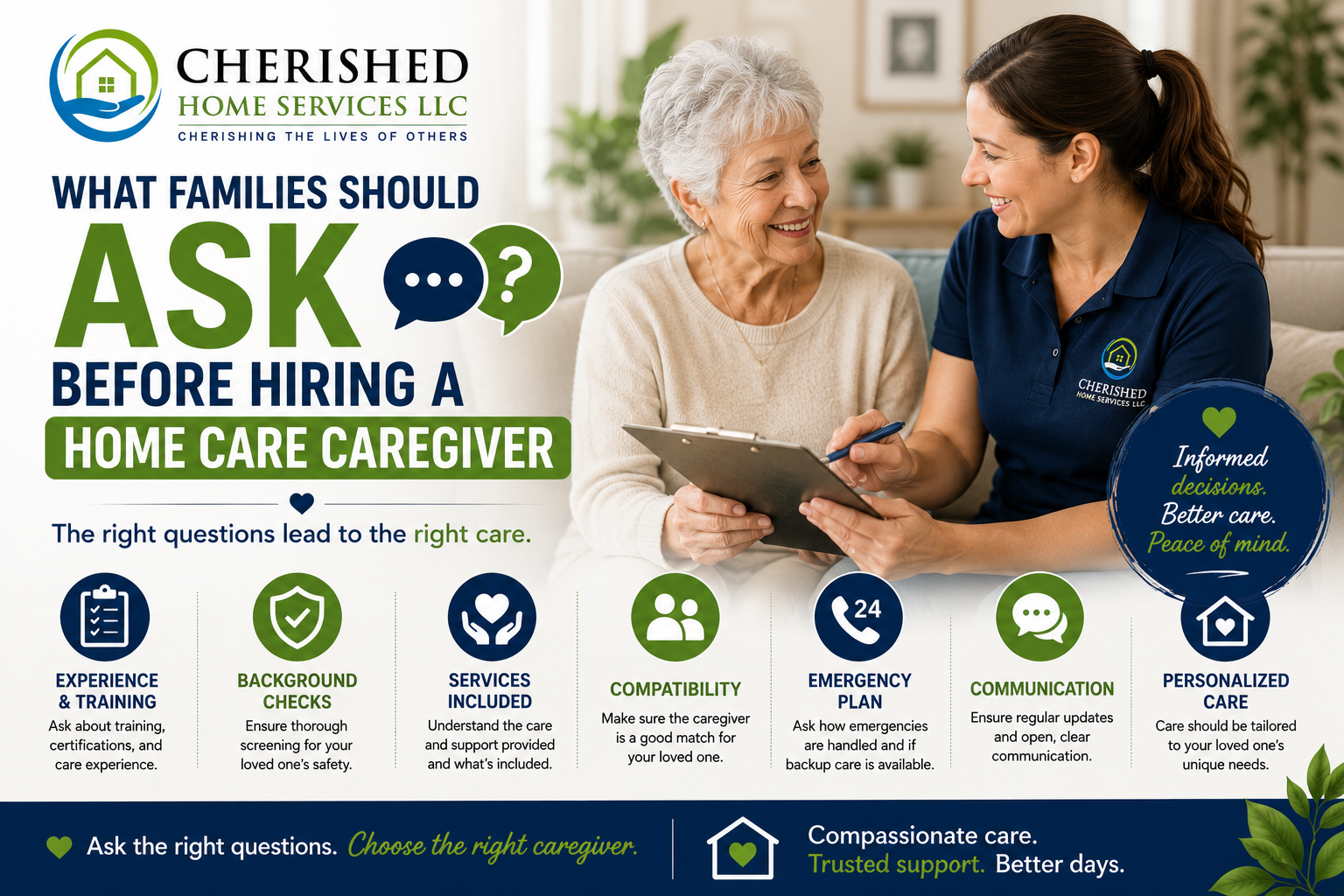
Not sure what to ask a prospective agency? Start here: What Families Should Ask Before Hiring a Home Care Caregiver.
This article is general information and is not medical advice. Changes in memory, mood, mobility, weight, or behavior can have many causes, including treatable medical conditions. Please consult your loved one’s physician about any concerns you notice.