Falls are one of the leading causes of injury among older adults. For many families, one unexpected fall can completely change a senior’s independence, confidence, and quality of life. The good news is that many falls can be prevented with the right support, safety adjustments, and daily care routines.
As more families choose aging in place over nursing facilities, creating a safe home environment has become more important than ever.
Why Senior Falls Are So Dangerous
A simple fall can lead to serious injuries such as:
- Hip fractures
- Head injuries
- Loss of mobility
- Long recovery periods
- Emotional fear of falling again
After a fall, many seniors begin limiting their movement, which can lead to muscle weakness, isolation, and declining health.
That is why prevention matters before an accident happens.
Common Causes of Falls at Home
Many homes contain hidden risks that families often overlook.
Some of the most common causes include:
- Slippery bathroom floors
- Poor lighting
- Loose rugs or cords
- Stairs without handrails
- Weak muscles or balance issues
- Side effects from medications
- Improper footwear
Even small obstacles can become dangerous for older adults.
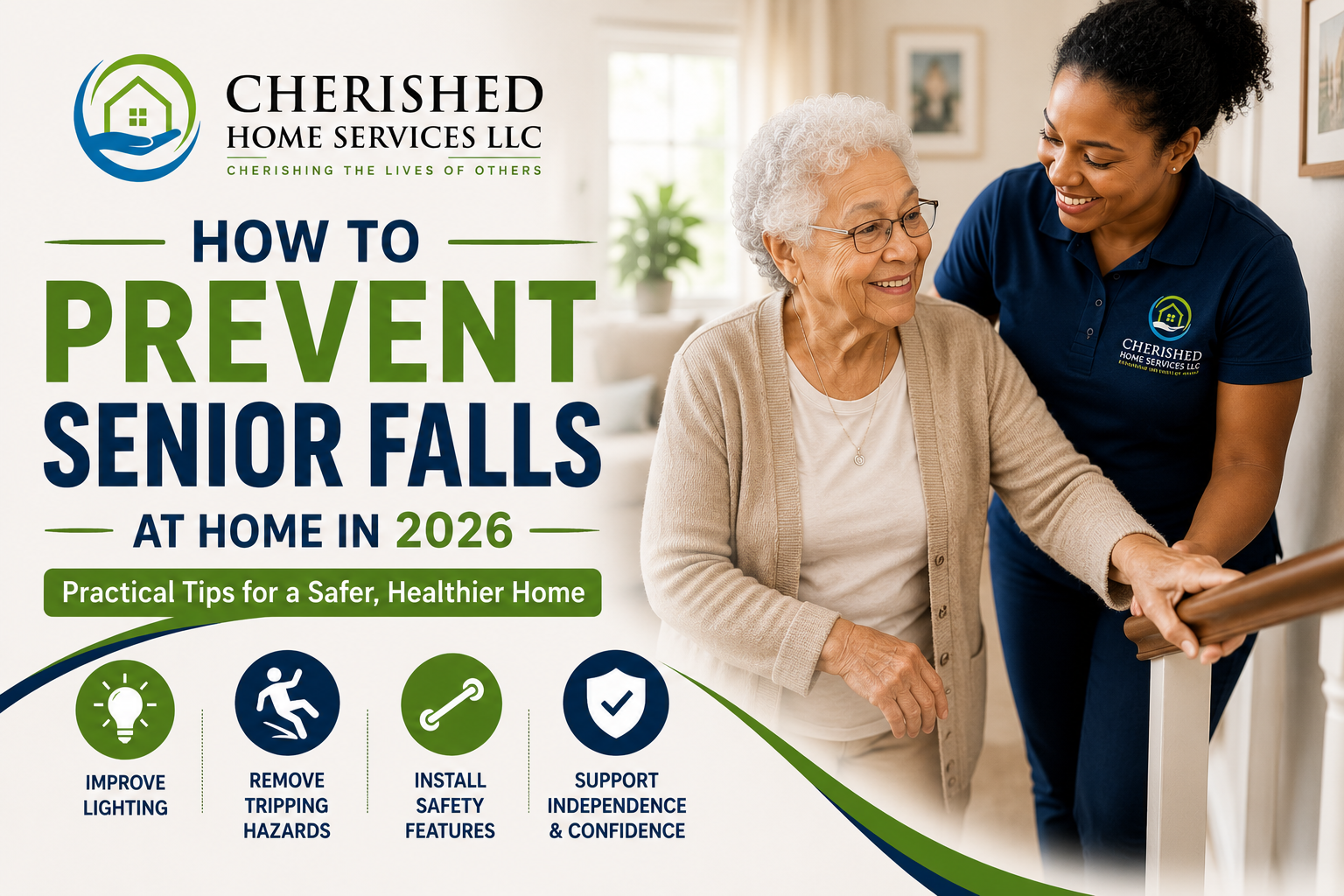
7 Ways to Prevent Senior Falls at Home
1. Improve Lighting Throughout the Home
Dim lighting makes it harder for seniors to see obstacles clearly, especially during nighttime.
Install:
- Bright hallway lights
- Motion sensor lights
- Bedside lamps
- Night lights in bathrooms
Good visibility greatly reduces fall risks.
2. Remove Tripping Hazards
Walk through the home carefully and remove anything that may cause trips or slips.
This includes:
- Loose rugs
- Electrical cords
- Cluttered walkways
- Unstable furniture
A cleaner walking path creates a safer environment immediately.
3. Install Bathroom Safety Features
Bathrooms are one of the highest-risk areas for falls.
Helpful additions include:
- Grab bars
- Non-slip mats
- Shower chairs
- Raised toilet seats
These simple adjustments can significantly improve safety and confidence.
4. Encourage Regular Movement and Exercise
Weak muscles and poor balance increase fall risks.
Gentle activities such as:
- Walking
- Stretching
- Chair exercises
- Physical therapy routines
can help seniors maintain strength and coordination.
Always consult a healthcare professional before starting a new exercise plan.
5. Review Medications Regularly
Some medications may cause:
- Dizziness
- Drowsiness
- Blurred vision
- Balance problems
Families should regularly review medications with a doctor or pharmacist to identify possible side effects.
6. Make Sure Seniors Wear Proper Footwear
Loose slippers or socks without grip can increase slipping risks.
Safer options include:
- Non-slip shoes
- Supportive walking shoes
- Closed-back slippers with traction
Proper footwear plays a bigger role than many families realize.
7. Consider Professional Home Care Support
Professional caregivers can help seniors move safely throughout the day while assisting with:
- Mobility support
- Medication reminders
- Personal care
- Meal preparation
- Fall prevention monitoring
Having compassionate assistance at home can provide peace of mind for both seniors and their families.
Warning Signs a Senior May Be at Higher Risk of Falling
Families should pay attention to signs such as:
- Holding onto walls while walking
- Difficulty standing up
- Frequent dizziness
- Shuffling feet
- Previous falls
- Fear of walking alone
Early action can help prevent serious injuries later.
How Home Care Can Help Prevent Falls
In-home caregivers do more than provide companionship. They also help seniors maintain safer daily routines and monitor changes in mobility or behavior.
At Cherished Home Services LLC, caregivers provide compassionate support that helps seniors remain safe, comfortable, and independent in their own homes.
Final Thoughts
Preventing falls is not just about safety it is about protecting a senior’s independence, confidence, and quality of life.
Small changes inside the home, combined with proper care and support, can make a major difference.
Families who take proactive steps today can help their loved ones stay healthier and safer for years to come.