As seniors grow older, loneliness often becomes one of the most overlooked health concerns families face. While many people focus on physical care needs, emotional well-being is just as important.
In 2026, more families are recognizing how isolation can affect a senior’s happiness, mental health, and overall quality of life.
Companion care provides more than assistance — it provides connection, conversation, emotional support, and comfort.
Why Loneliness Among Seniors Is Increasing
Many older adults experience major life changes that can increase feelings of loneliness, including:
- Retirement
- Loss of a spouse
- Family moving away
- Limited mobility
- Health conditions
- Reduced social interaction
Over time, isolation can affect both emotional and physical health.
Many seniors spend long hours alone each day, which may lead to sadness, anxiety, or depression.
The Emotional Impact of Senior Isolation
Loneliness does not only affect emotions. Studies continue showing that social isolation may increase risks related to:
- Depression
- Anxiety
- Memory decline
- Poor sleep
- Reduced physical activity
- Higher stress levels
Seniors who feel disconnected often lose motivation to stay active and engaged in daily life.
What Is Companion Care?
Companion care is a type of non-medical home care focused on emotional support, social interaction, and daily companionship for seniors living at home.
Unlike clinical care, companion care centers around improving quality of life and reducing feelings of isolation.
Companion caregivers may assist with:
- Friendly conversation
- Meal companionship
- Light housekeeping
- Transportation
- Daily activities
- Hobbies and walks
- Emotional support
Sometimes, simply having someone present can make a major difference.
Signs a Senior May Be Struggling with Loneliness
Families should pay attention to emotional and behavioral changes such as:
- Sleeping more than usual
- Loss of interest in hobbies
- Avoiding phone calls or visits
- Mood changes
- Lack of motivation
- Changes in appetite
- Increased sadness or anxiety
These signs are often mistaken as “normal aging,” but emotional isolation should never be ignored.
How Companion Care Improves Mental Health
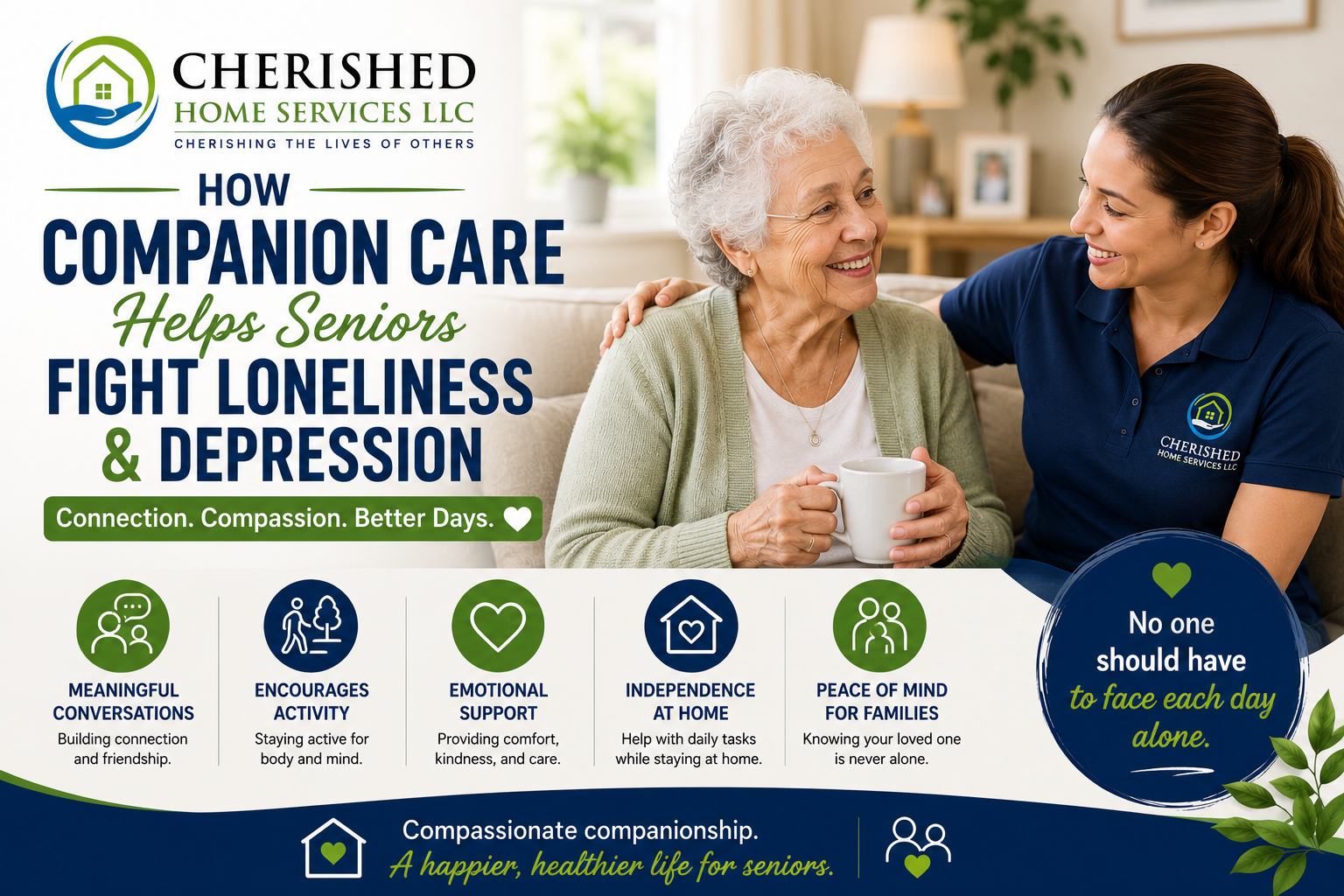
1. Provides Meaningful Social Interaction
Regular conversation and companionship help seniors feel seen, valued, and emotionally connected.
Even small daily interactions can improve mood significantly.
2. Encourages Physical Activity
Companion caregivers often encourage seniors to:
- Take walks
- Stay active
- Participate in hobbies
- Maintain routines
Staying engaged physically and mentally can improve overall well-being.
3. Creates Emotional Comfort
Many seniors feel safer and calmer knowing someone is there to support them.
Companionship can reduce fear, stress, and emotional isolation.
4. Supports Independence at Home
Companion care allows seniors to remain in familiar surroundings while still receiving support and social connection.
This balance often improves confidence and emotional stability.
5. Gives Families Peace of Mind
Families cannot always be present every hour of the day due to work, parenting, or distance.
Knowing a loved one has compassionate companionship provides reassurance and emotional relief for family members as well.
Companion Care vs Personal Care
Many families confuse companion care with personal care services.
Companion Care Focuses On:
- Emotional support
- Social interaction
- Daily companionship
- Light assistance
Personal Care Includes:
- Bathing assistance
- Dressing
- Hygiene support
- Mobility assistance
Some seniors benefit from both services together depending on their needs.
Why Emotional Care Matters Just as Much as Physical Care
A senior’s emotional health directly affects:
- Physical energy
- Motivation
- Appetite
- Sleep quality
- Overall happiness
Compassionate companionship can help seniors feel more connected, confident, and engaged in life again.
How Home Care Services Can Help
At Cherished Home Services LLC, compassionate caregivers provide companionship and emotional support that helps seniors remain comfortable, connected, and independent at home.
Whether families need occasional visits or ongoing support, companion care can greatly improve a senior’s daily life and emotional well-being.
Final Thoughts
Loneliness among seniors is more common than many families realize, but it should never be considered a normal part of aging.
Simple human connection can make an extraordinary difference.
Companion care helps seniors feel supported, valued, and emotionally connected while allowing them to continue living safely and comfortably at home.