As parents and loved ones grow older, families often face one difficult question:
Should we choose aging in place or move our loved one into assisted living?
For many families, this decision comes with emotional stress, financial concerns, and fear of making the wrong choice. While every situation is different, understanding the benefits and challenges of both options can help families make a more confident and informed decision.
In 2026, more seniors are choosing to age in place because they want to remain comfortable, independent, and connected to the place they call home.
What Does Aging in Place Mean?
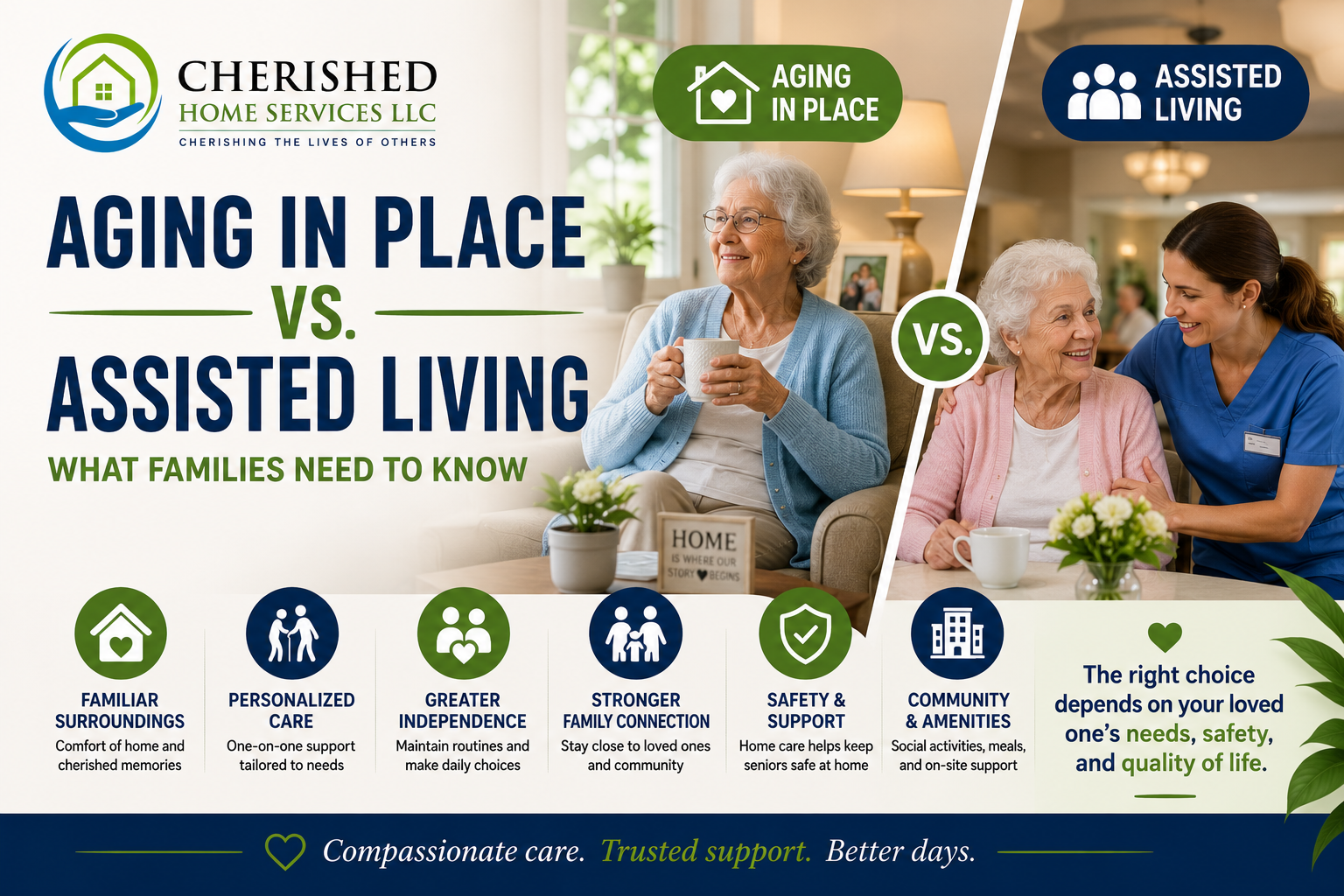
Aging in place means a senior continues living in their own home safely and comfortably as they grow older instead of relocating to a nursing home or assisted living facility.
This may include support from:
- Family caregivers
- Professional home caregivers
- Home safety modifications
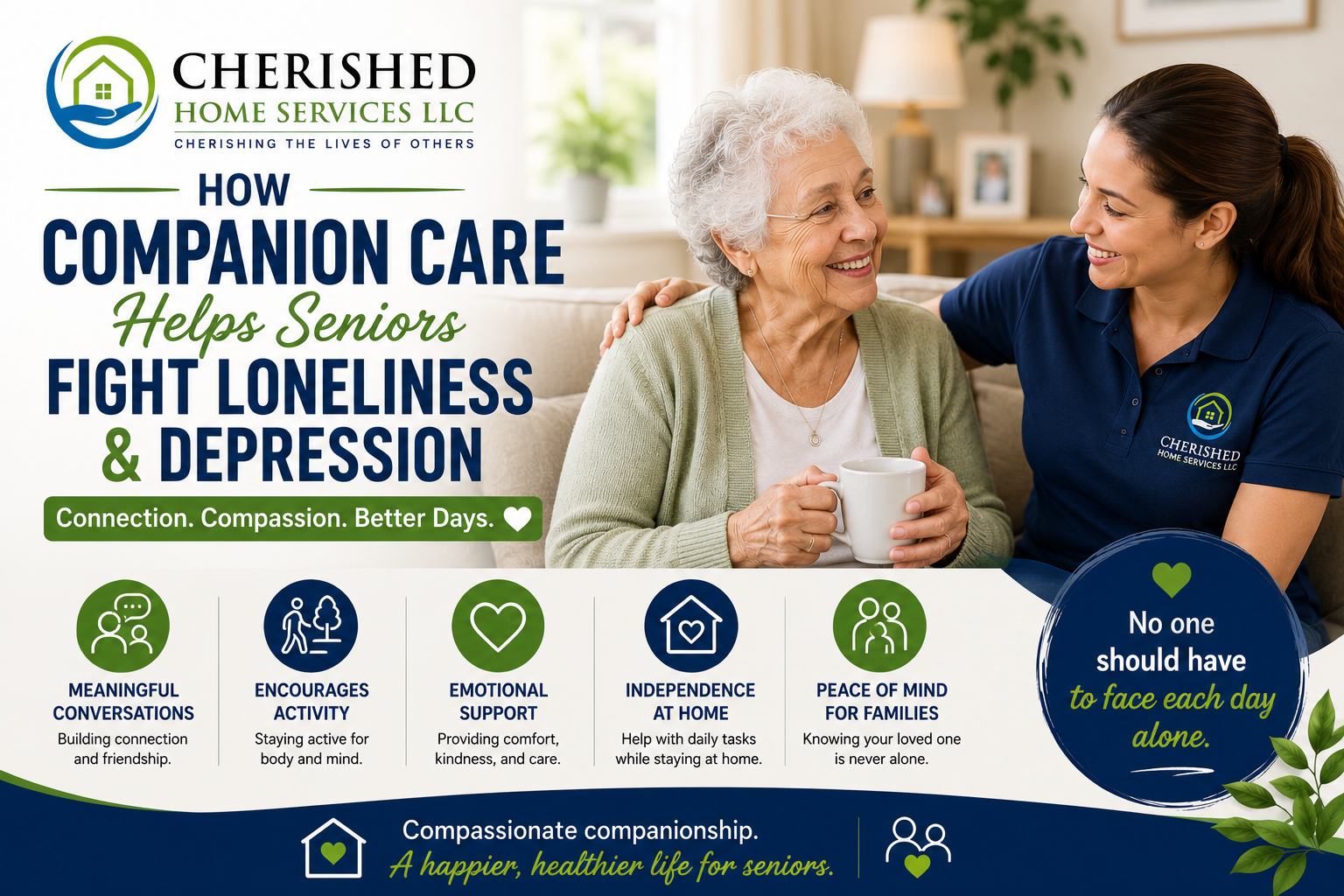
- Companion care services
- Personal care assistance
The goal is to help seniors maintain independence while receiving the support they need.
What Is Assisted Living?
Assisted living facilities provide housing, meals, supervision, and daily assistance for seniors who need help with routine activities.
These communities often include:
- Shared or private rooms
- Staff support
- Group activities
- Medication management
- Dining services
While assisted living works well for some seniors, others struggle with the emotional adjustment of leaving their homes.
Why Many Seniors Prefer Aging in Place
For many older adults, home represents:
- Comfort
- Familiar memories
- Independence
- Privacy
- Emotional security
Leaving home can feel overwhelming and emotionally difficult.
Remaining at home often helps seniors feel more:
- Relaxed
- Confident
- Independent
- Connected to family routines
This emotional stability can positively impact mental and physical health.
Benefits of Aging in Place
1. Familiar Environment
Seniors remain surrounded by their belongings, routines, and memories, which can reduce confusion and anxiety.
This is especially important for seniors experiencing memory loss or dementia.
2. More Independence
At home, seniors often maintain greater control over:
- Daily schedules
- Meals
- Activities
- Sleep routines
- Personal preferences
Maintaining independence can improve emotional well-being.
3. Personalized One-on-One Care
Unlike large facilities, home care offers more individualized attention tailored to a senior’s specific needs.
Professional caregivers can assist with:
- Personal hygiene
- Meal preparation
- Mobility support
- Medication reminders
- Companionship
4. Stronger Family Connection
Aging in place often allows families to remain more actively involved in their loved one’s daily life.
Seniors may feel less isolated when surrounded by familiar family interactions.
When Assisted Living May Be Necessary
Although aging in place works well for many seniors, assisted living may become necessary in situations involving:
- Advanced medical conditions
- Severe mobility limitations
- 24/7 medical supervision needs
- Unsafe home environments
- Serious memory-related wandering risks
Families should carefully evaluate safety, health needs, and long-term care requirements.
Questions Families Should Ask Before Deciding
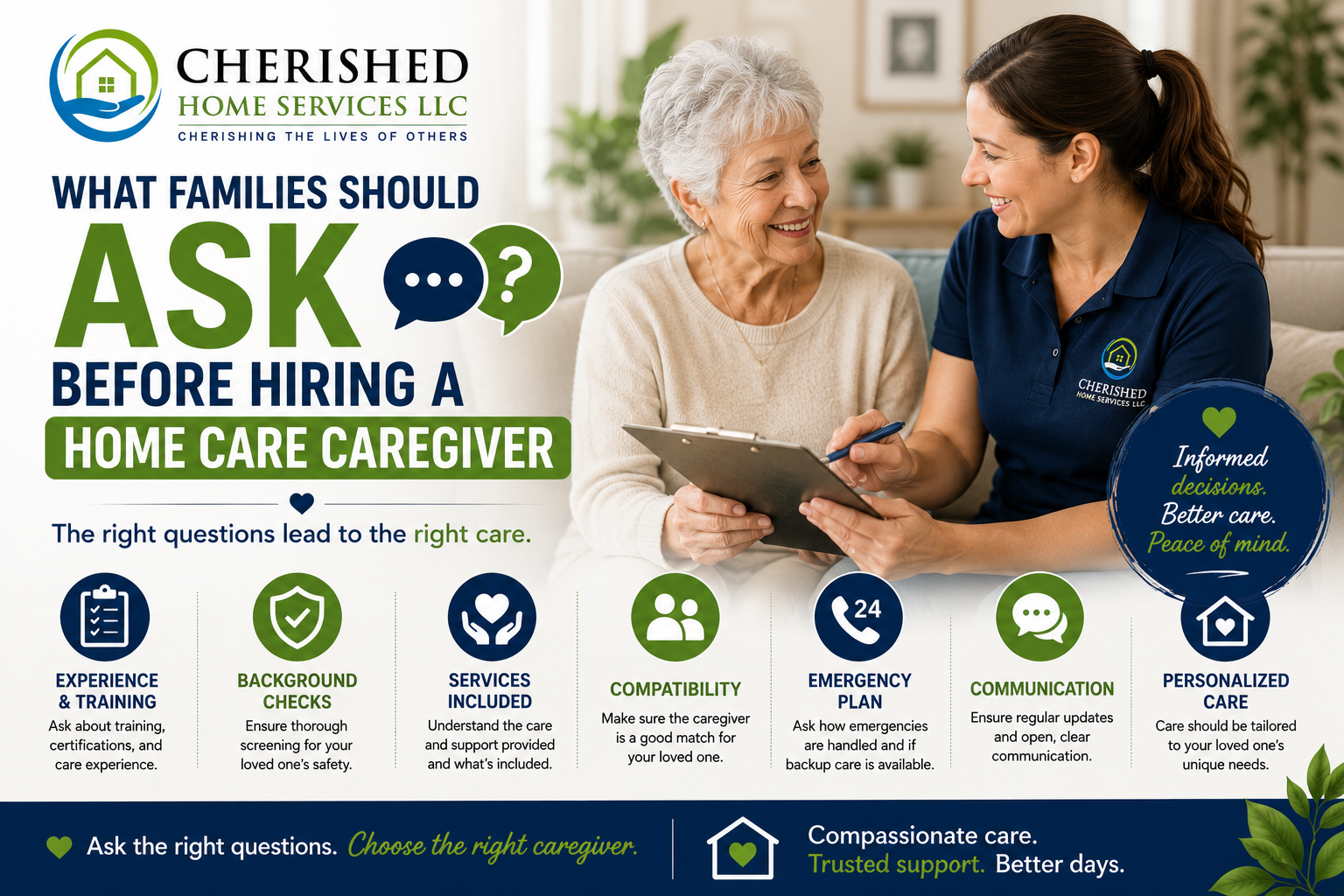
Before making a decision, families should consider:
Is the home safe?
Can the home be modified to reduce risks?
Does the senior want to remain at home?
A senior’s emotional preference matters greatly.
What level of support is needed?
Some seniors only need part-time assistance, while others require daily care.
Is family caregiver burnout becoming a concern?
Professional support can help families avoid exhaustion and stress.
What option provides the best quality of life?
The goal should always be safety, dignity, comfort, and emotional well-being.
How Home Care Supports Aging in Place
Professional home care allows many seniors to remain safely at home longer while giving families peace of mind.
At Cherished Home Services LLC, compassionate caregivers help seniors maintain independence through personalized in-home support designed around each family’s needs.
Services may include:
- Companion care
- Personal care assistance
- Meal preparation
- Mobility support
- Medication reminders
- Respite care for families
Final Thoughts
There is no one-size-fits-all answer when choosing between aging in place and assisted living.
However, many seniors thrive emotionally and physically when given the opportunity to remain safely in the comfort of their own homes.
Families who understand all available options can make decisions with greater confidence, compassion, and peace of mind.